
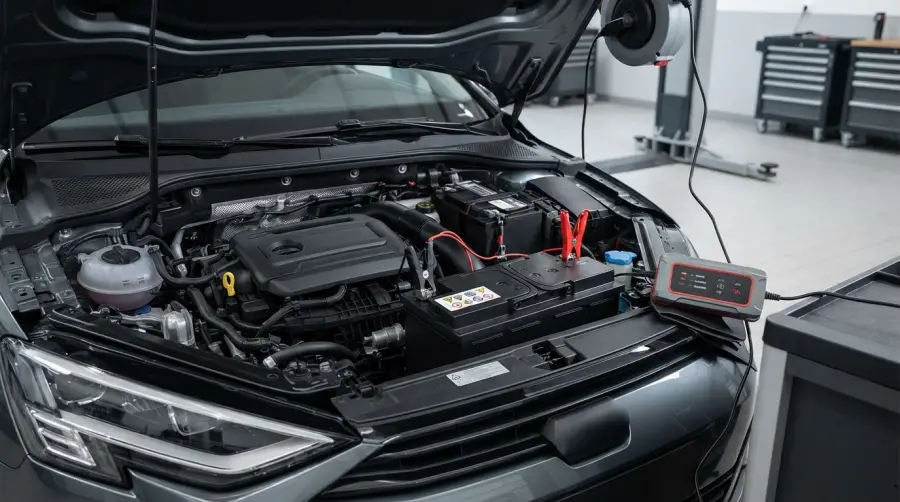
Commercial Disclosure: The HiMASSi® Editorial Team combines local Australian market insight with the battery engineering and manufacturing expertise of Shenzhen Himax Electronics Co., Ltd. to provide practical, technically informed content for businesses, OEMs, system integrators, and industry professionals. As Himax Electronics’ official flagship brand in Australia, HiMASSi® focuses on LiFePO4 batteries, custom battery solutions, BMS technology, charging systems, battery selection, and application-specific power solutions. Our content covers technical guidance, industrial and commercial applications, product updates, and HiMASSi® news. All content reflects HiMASSi®’s official editorial perspective and is intended to help Australian customers evaluate battery solutions based on their application requirements, operating conditions, system compatibility, and project needs.
Key Takeaways
- Driving less can increase the risk of a flat car battery, but whether the vehicle becomes difficult to start also depends on parasitic power draw, battery condition, ambient temperature, and charging.
- After the vehicle is switched off, security systems, control modules, and some aftermarket accessories may continue consuming power. The battery itself also gradually self-discharges.
- Frequent short trips may not replace the energy used during starting and while the vehicle is parked. Starting the engine for a few minutes occasionally is also not a substitute for effective charging.
- Remaining at a low state of charge for an extended period can cause lead-acid batteries to develop sulfation that may be difficult to reverse, reducing capacity and starting capability.
- Planning vehicle use, managing loads while parked, using a compatible maintenance charger, and promptly investigating abnormal battery drain can help reduce the risk of a flat battery.
Introduction
Working from home, switching to public transport, or leaving a second family car parked until the weekend can all increase the amount of time a vehicle spends unused. For Australian drivers, cars left at the airport during business trips or family vehicles parked during holidays often face the same question: why won’t the car start after sitting for a while, even though it started normally before it was parked?
Driving less can indeed contribute to a flat car battery, but the key issue is whether the battery’s energy balance becomes negative. If the amount of energy being replenished remains lower than the energy consumed by starting, standby systems, and other electrical equipment, the battery can gradually lose the reserve needed to start the engine.
This article mainly discusses the common 12V automotive starting batteries used in petrol and diesel vehicles, including conventional flooded, EFB, and AGM batteries. Hybrid vehicles, electric vehicles, and models that use lithium low-voltage batteries should be assessed according to their specific owner’s manuals.
Why Does a Car Battery Lose Charge When You Drive Less?
From a battery manufacturing and application perspective, a car battery is not simply an energy-storage container that stops changing once the vehicle is parked.
After the vehicle is switched off and enters sleep mode, systems such as the alarm, clock, and keyless entry may still require small amounts of power. Dash cams, parking surveillance systems, GPS trackers, and other aftermarket accessories can add further electrical loads. At the same time, the battery gradually loses energy through self-discharge.
Once the vehicle is restarted, the alternator can recharge the battery. However, how much energy is actually restored depends on the vehicle’s charging-control strategy, driving time, electrical loads, and the battery’s own charge acceptance.
Frequent short trips may therefore cause the battery’s state of charge to decline gradually. Charger manufacturer CTEK also notes that short journeys may not provide enough time to fully replace the energy consumed during starting.
In a lead-acid battery, normal discharge produces lead sulfate. When the battery is recharged promptly, this process can be largely reversed. If the battery remains at a low state of charge for an extended period, lead sulfate can gradually form crystals that are more difficult to convert back into active material. This can reduce usable capacity and starting performance.
How Long Can a Car Sit Before the Battery Goes Flat? These Factors Matter More Than the Number of Days
There is no single parking duration that applies to every vehicle. Even cars using batteries with the same rated capacity can experience very different results while parked.
| Factor | How It Affects Battery Drain | What Drivers Should Check |
| State of charge before parking | A battery that was already undercharged has less starting reserve | Whether recent driving has mainly consisted of short trips |
| Battery health | Ageing can reduce actual capacity and starting capability | Slow cranking or repeated flat-battery incidents |
| Vehicle sleep current | Standby loads accumulate over time | Whether the vehicle enters sleep mode normally and whether abnormal loads are present |
| Aftermarket equipment | Parking surveillance and other accessories may continuously draw power | Operating time and low-voltage cutoff settings |
| Ambient temperature | Heat can accelerate self-discharge and ageing; cold can reduce starting output | Parking environment and seasonal conditions |
| Charging opportunities | Effective charging can compensate for energy loss | Whether a compatible charging method is available |
A simple hypothetical calculation can help illustrate energy consumption while a vehicle is parked:
Energy Consumption (Ah) = Average Current (A) × Time (h)
Assume the vehicle has an average parked current draw of 30mA, or 0.03A. Over 14 days, the calculated consumption would be approximately:
0.03 × 24 × 14 = 10.08Ah
This is only an example and does not represent the normal sleep current of every vehicle. It also does not include the battery’s own self-discharge.
You should not simply divide the battery’s rated capacity by the parked current draw to calculate “how many days the car can sit.” The battery needs to retain sufficient energy and instantaneous current capability to start the engine, and it may not have been fully charged when the vehicle was parked.
Tip 1: Combine Short Trips and Avoid Repeated Starts Followed by Quick Shutdowns
If most of your driving involves school runs, shopping, or short commutes, consider combining trips when practical to reduce repeated cold starts followed by short periods of driving.
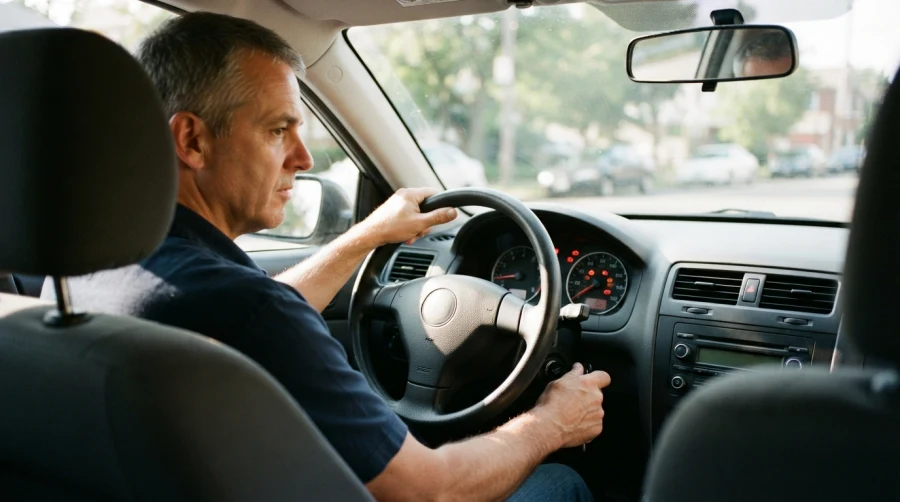
Longer, continuous normal driving can provide more opportunity for the charging system to replenish the battery. However, there is no universal rule that driving for a certain number of minutes will fully recharge every battery. The battery’s initial state of charge, alternator-control strategy, and electrical loads all affect the result.
Starting the engine every few days and letting it idle for only a few minutes is also not recommended as the primary battery-maintenance method. A short period of idling may not replace the energy consumed during starting, and the engine should never be run in an enclosed garage.
If the battery is already significantly discharged, arrange appropriate testing and charging rather than relying on a single drive to restore it.
Tip 2: Reduce Unnecessary Power Consumption While Parked
After parking, check that reading lights, luggage-compartment lights, and plug-in accessories are no longer operating. Some vehicles continue supplying power to accessory sockets after the ignition is switched off, so this should be confirmed for your specific model.
For dash cams with parking surveillance, configure operating time and low-voltage cutoff settings appropriately. However, a low-voltage cutoff does not guarantee that the vehicle will still start, because starting capability is also affected by temperature, battery ageing, and connection condition.
If the battery repeatedly goes flat within a relatively short period, have the vehicle’s sleep state and parasitic current draw checked rather than simply installing a larger-capacity battery.
For long-term storage, do not automatically assume that disconnecting the negative terminal is the correct solution. Disconnecting the battery may affect the alarm system, window initialization, or other vehicle settings. Whether the battery should be disconnected depends on the vehicle manufacturer’s storage procedure.
Tip 3: Use a Compatible Smart Maintenance Charger When the Car Is Driven Infrequently
For vehicles that remain parked for extended periods and have access to a suitable power source, a smart charger with a maintenance mode can monitor the battery and replenish charge according to its design.
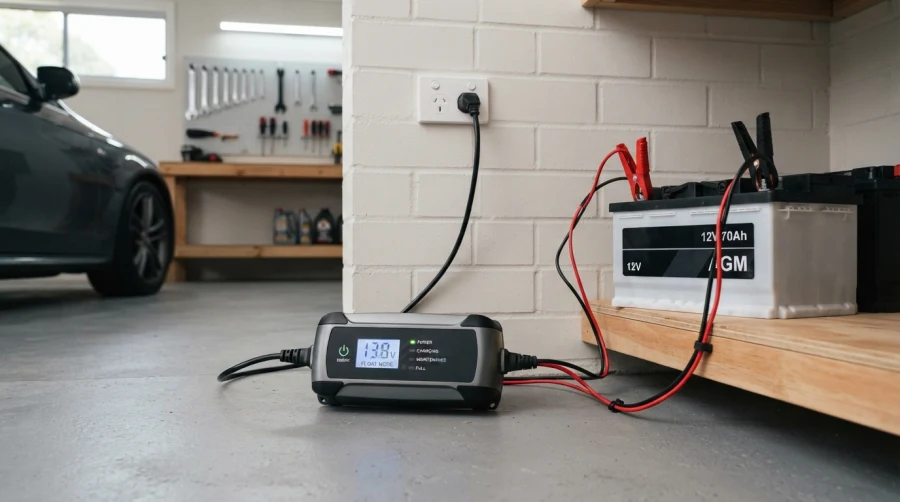
When choosing a charger, check the following:
| Item to Check | Requirement |
| Battery type | Charger explicitly supports the relevant conventional lead-acid, EFB, AGM, or other battery chemistry |
| Voltage and capacity range | Compatible with the vehicle battery specifications |
| Maintenance-charging function | Manufacturer’s instructions specifically permit the intended connection and operating method |
| Charging current and temperature conditions | Comply with battery manufacturer requirements |
| Vehicle connection points | Follow the vehicle manufacturer’s specified charging points and connection sequence |
A smart maintenance charger is not the same as a conventional trickle charger that continuously supplies current. A charger being capable of charging the battery does not automatically mean it is suitable for long-term connection.
Vehicles equipped with battery-monitoring sensors may require specific connection procedures. Similarly, before using any “repair” or “reconditioning” mode, confirm that the battery type and vehicle electronics permit it rather than activating an incompatible charging program.
Tip 4: Monitor Battery Health and Check the Entire System if the Battery Repeatedly Goes Flat
A low state of charge and an ageing battery are not the same thing.
A low state of charge describes how much energy is currently stored in the battery. Battery ageing involves changes in actual capacity, internal resistance, and output capability. An ageing battery may appear to be charged but still fail to deliver the high current required for reliable engine starting.
If the engine cranks slowly, the vehicle repeatedly needs a jump-start, or the battery terminals are corroded or loose, arrange an inspection. Testing may include battery state of charge, starting performance, terminal connections, the vehicle charging system, and, where necessary, parasitic current draw while parked.
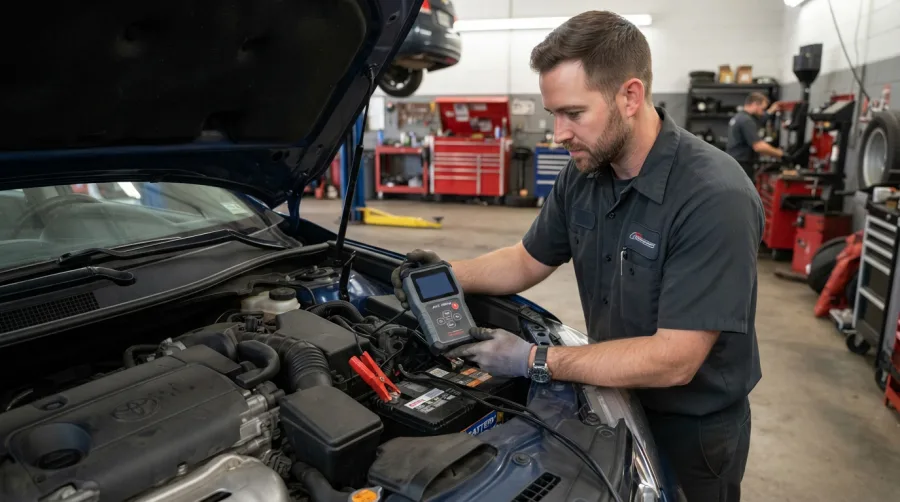
A single resting-voltage reading cannot fully determine battery health, and measurements taken immediately after charging may also be affected by surface charge. A proper assessment should consider battery type, temperature, and an appropriate testing method.
When replacing the battery, follow the vehicle manufacturer’s requirements for battery technology, dimensions, polarity, and starting performance. EFB or AGM batteries specified for start-stop vehicles should not be replaced with conventional batteries simply because another battery physically fits.
Tip 5: Plan Battery Charging Before Leaving the Car for an Extended Period and Distinguish Emergency Starting From Maintenance
Before a business trip, holiday, or seasonal period of non-use, check the battery condition, recharge it if necessary, and switch off unnecessary parked loads. If an appropriate power supply and installation arrangement are available, use a maintenance charger according to the relevant instructions.
If you carry a portable jump starter, check that it is compatible with the vehicle voltage and engine type, confirm its operating-temperature range, and periodically check its own state of charge.
A portable jump starter is intended to assist with emergency engine starting. It does not replace battery testing, proper charging, or electrical-system repairs. A general-purpose portable power station should not be used to jump-start a vehicle unless it is specifically designed and rated for that purpose.
RAC WA’s battery guidance also notes that extended periods of non-use and frequent short trips can affect battery charge, and that an appropriately discharged battery should be returned to a suitable state of charge.
Common Questions
Will My Car Battery Go Flat if I Only Drive Once a Week?
It can, but driving frequency alone does not determine the outcome.
The length of each trip, parked electrical loads, battery health, and initial state of charge all matter. One short trip per week may still be insufficient to compensate for the energy consumed during the rest of the week.
Can a New Car Battery Go Flat if the Car Is Not Driven for a Long Time?
Yes. A new battery still self-discharges and supplies power to the vehicle’s standby systems.
Replacing the battery does not eliminate abnormal parasitic current draw. If the problem repeatedly occurs, the underlying cause should be investigated.
Will a Flat Car Battery Return to Its Original Performance After Being Fully Charged?
Not necessarily.
A battery that has been discharged for a short period without significant damage may recover after appropriate charging. However, prolonged undercharging, deep discharge, or internal damage can reduce capacity and starting capability. Battery condition should be evaluated after charging.
Can an AGM Battery Be Left for Long Periods Without Charging?
No. AGM batteries are still lead-acid batteries and need to be maintained at an appropriate state of charge.
Their construction does not eliminate self-discharge or the electrical consumption of vehicle standby systems.
Will Installing a Higher-Capacity Battery Solve Battery Drain While the Car Is Parked?
A larger compatible battery may provide greater energy reserve, but it will not eliminate abnormal parasitic loads or insufficient charging.
Any replacement battery must also meet the vehicle’s installation, charging-management, and compatibility requirements. The cause of repeated battery drain should be investigated first.
Can the Low-Voltage Battery in a Hybrid or Electric Vehicle Also Go Flat?
Yes. The traction battery and low-voltage battery perform different functions, and the way the low-voltage battery is maintained varies between vehicle models.
Do not automatically apply the idling or driving-based charging practices used for conventional petrol or diesel vehicles. Follow the vehicle manufacturer’s instructions for long-term parking and battery maintenance.
HiMASSi 12V Automotive Starting Batteries
HiMASSi is an official flagship brand developed by Shenzhen Himax Electronics Co., Ltd. for the Australian market. From a battery manufacturing and application perspective, we focus on real-world requirements for everyday driving, backup power, and outdoor travel, with particular attention to matching battery capacity, output capability, charging conditions, and operating environment.
Explore HiMASSi battery information and compare specific model specifications with your vehicle requirements and driving habits to develop an appropriate battery maintenance and power-management plan for everyday driving and extended vehicle storage.